From Group Chat to 501(c)(4): The Messy, Worthwhile Leap Into a Real Organization
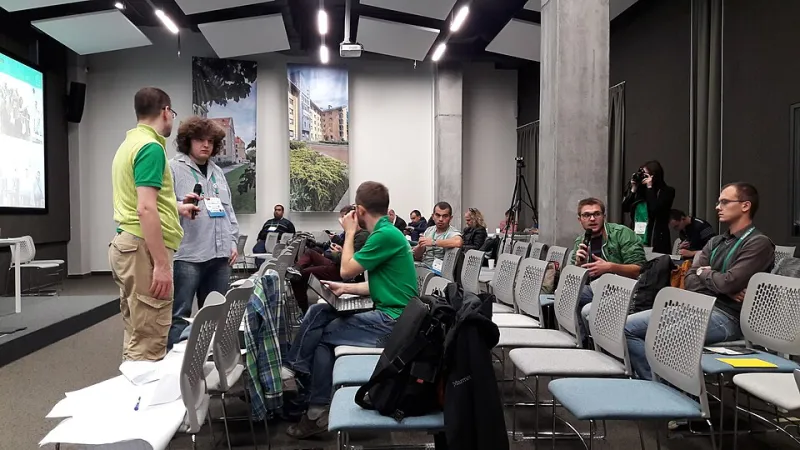
Photo: Tomasz Bladyniec, CC BY-SA 4.0, via Wikimedia Commons
Every neighborhood has one. The group chat where parents trade babysitting nights. The garage with a lending shelf of power tools. The text thread where renters in the same building flag broken heaters and sketchy lease clauses.
These informal networks are the connective tissue of American community life — and increasingly, they're the seedbed of serious political power. But at some point, many of them hit the same wall. A landlord pushes back. A zoning fight needs lawyers. A city council member says, "Who exactly are you representing?"
That's the moment when someone in the thread types the question: should we become, like, a real organization?
We followed three mutual-aid networks through that transformation — the wins, the paperwork, and the parts nobody warns you about. Here's what the leap actually looks like.
The Co-Op That Got Sued Into Existence
Start in a mid-sized Midwestern city, where a babysitting co-op of about forty families had been trading childcare credits on a shared spreadsheet since 2019. When the city rewrote its home-daycare ordinance in a way that would've shuttered several of the co-op's most active members, the group discovered something uncomfortable: they had no legal standing, no bank account, and no name anyone at City Hall recognized.
"We showed up to the hearing as 'some moms,'" one organizer told us. "The council member we needed to flip asked who we were affiliated with. The answer was a Google Sheet."
Within six months, the co-op incorporated as a nonprofit mutual-aid association, adopted bylaws cobbled together from a library template, and elected a three-person steering committee. The ordinance got amended. The childcare network survived.
The trade-off? The spreadsheet era ended. Members now sign an annual agreement, pay $20 in dues, and vote on a budget. Two founding members left, saying the whole thing "started to feel like an HOA." That's a real cost, and pretending otherwise does nobody any favors.
What You Gain When You Incorporate
Here's the honest ledger. Going formal gets you:
- Standing. Elected officials respond differently to a named organization with a mailing address than to an anonymous thread.
- Money. A bank account means you can collect dues, fund a lawyer, or run a mailer.
- Permanence. When founders burn out or move, the entity persists.
- 501(c)(4) muscle. Unlike charities, c(4)s can lobby without strict limits and even engage in some electoral activity — which is why advocacy groups from the local to the national level choose that structure.
The tenant group chat in our second story — three hundred renters across a Sun Belt city — chose the c(4) route after their city council ignored two years of habitability complaints. As a formal advocacy organization, they hired a part-time organizer, testified at every relevant hearing, and got a proactive rental-inspection ordinance on the agenda.
What You Lose — And Why It Matters
Now the other column. Informal networks run on trust and low stakes. Formal ones run on process.
Incorporation means minutes, elections, liability insurance, and someone being responsible when something goes wrong. It means decisions that used to happen in thirty seconds of texting now require a quorum. It can mean the most marginalized people in your network — folks without stable housing or documents, say — get edged out by paperwork requirements.
The tool library in our third story took a middle path. They filed the minimum paperwork to exist legally, but kept decision-making in a monthly open meeting where anyone who shows up gets a vote. "We formalized just enough to protect the volunteers," their coordinator said. "We refused to formalize the vibe."
That phrase might be the whole strategy in one sentence.
So When Should You Make the Leap?
Ask yourself three questions:
- Is anyone asking you to be accountable? If officials, landlords, or opponents want to know who you are, that's your signal.
- Are you handling money or risk? Once dues, donations, or shared property enter the picture, informality becomes a liability.
- Do you need to lobby, repeatedly? One comment at one hearing doesn't require a structure. Sustained advocacy does.
If you answered yes to two or more, start small: pick a simple structure, write short bylaws, and borrow templates from established groups in your state rather than inventing your own. A half-day with a friendly nonprofit lawyer — many bar associations offer free clinics — beats months of guessing.
And whatever you do, protect the informal core that got you here. Keep the potluck. Keep the group chat. The paperwork is the skeleton; the relationships are the body. Organizations that forget which is which end up with impressive bylaws and nobody at the meeting.
The babysitting co-op didn't beat the city council because of its articles of incorporation. It won because forty families already trusted each other enough to act together. The paperwork just gave that trust a name City Hall had to write down.