Follow the Fireworks: What Your Town's Parade Ledger Says About Who Really Matters at City Hall
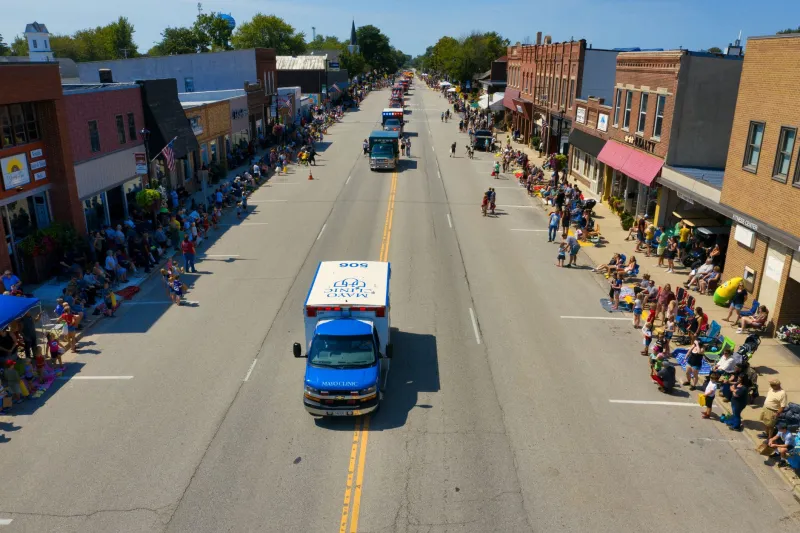
Every July, the same thing happens in towns across America. Main Street closes down. Somebody's uncle dresses as the town mascot. A local bank's logo shows up on seventeen banners, and the fireworks — those fireworks, the ones that somehow get more expensive every year — light up the sky while the council members wave from a convertible.
It's easy to file all of this under 'charming small-town stuff' and move on. But here at Our Response, we'd suggest you file it somewhere else: under evidence.
Because a town's celebration budget is one of the most honest documents your local government produces all year. Nobody guards it carefully. Nobody spins it. It's just... what they spend, and on whom. And if you learn to read it, you'll know more about who actually holds power in your town than any campaign mailer will ever tell you.
Start With the Receipts
Most municipalities publish their special events or community celebration budgets — sometimes as a line item in the parks and recreation department, sometimes as a standalone 'events fund,' sometimes buried in the downtown business alliance's public filings. If your town doesn't post it online, that's your first clue. Ask for it. A records request for the annual festival budget is about the friendliest request a clerk will field all year. It's not adversarial. It's practically patriotic.
Once you have it, don't just look at the total. Look at the shape of the spending:
- Who gets paid and who doesn't. Are the sound vendors, security, and porta-potty contracts going to the same three companies year after year? Those are relationships, not coincidences — and relationships mean influence.
- Who sponsors what. A $5,000 'presenting sponsor' tag for the county's biggest employer tells you who has the council's ear. Compare that list to who shows up at public hearings in October. Spoiler: it's often the same names.
- Who gets in-kind deals. That 'free' main stage? Somebody donated it. Find out who, and what they've asked the city for lately — a zoning variance, a tax abatement, a parking lot. In-kind generosity is often a down payment.
None of this is necessarily corrupt. Small towns run on relationships; that's not a scandal, it's a system. But if you want to change the system, you first have to see it clearly.
The Permit Trail Tells a Second Story
Here's the part almost nobody checks: the permits. Pull the special event permits for the parade and festival season and ask a simple question — who got one easily, and who had to fight?
In a lot of towns, the established festival gets a rubber-stamped permit and a waived fee, while a newer group — a mutual aid collective, a cultural association, a union local wanting a booth — gets handed a stack of requirements, insurance mandates, and a $750 'administrative fee.' Same street. Same holiday. Very different treatment.
That gap is your town's power structure made visible in paperwork. And it's a perfectly concrete thing to raise at a council meeting: 'Why did Organization A pay $750 for the same permit Organization B got free?' Watch how fast the room gets uncomfortable. That discomfort is data.
Use the Nice Season
Here's the strategic kicker, and it's the real reason to do this now: summer is the friendly season.
The budget fights, the zoning battles, the school board wars — those heat up in September and October. Right now, council members are posing for photos next to the dunk tank and are genuinely happy to chat. The city clerk isn't buried. The parks director has time to talk.
So use the pageantry. Go to the festival. Buy the rotary club's lemonade. Introduce yourself to the council member judging the pie contest and ask a genuinely easy question: 'Hey, how does the festival budget actually work? Who decides on the sponsors?' That's not a confrontation — it's a relationship starter, and you're building the account you'll draw on when you need their vote on something that matters in the fall.
Then, when the serious fights arrive, you won't be a stranger at the mic. You'll be the person who asked a smart question by the fireworks.
Your Three-Step Summer Assignment
- Request the festival budget and event permits — a short email to your clerk's office does it. Cite your state's public records law if you want a faster response.
- Make a two-column list: sponsors and vendors on one side, recent requests to the city (variances, contracts, abatements) on the other. Look for the overlap. There's always overlap.
- Show up once, socially. Festival, concert in the park, whatever. Meet one decision-maker in a setting where nobody's angry. That's not selling out — that's organizing.
The Fourth of July is supposed to be about self-government. This year, make it literal. The flags come down in a week, but the map you draw from the ledger will guide you all the way to November.